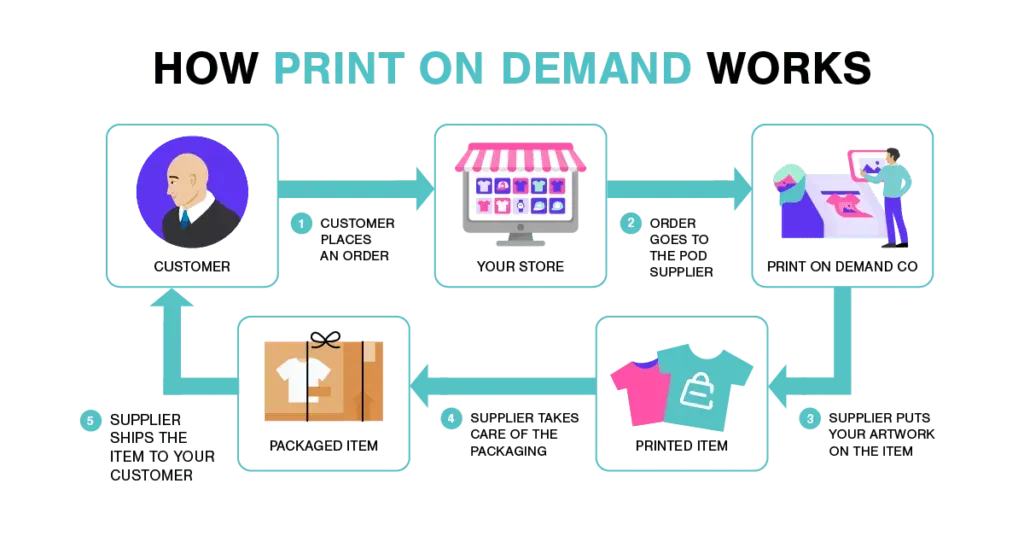
Print on Demand Business has emerged as a highly accessible and scalable path for creators in 2026. A well-planned POD store setup helps you shine in a crowded market, while offering a curated range of print on demand products from apparel to home goods. If you’re wondering how to start a POD business, this guide provides a practical roadmap from niche definition to launch. Investing in POD branding and POD marketing strategies sets you apart, driving credibility and repeat purchases. With a focused niche, strong visuals, and optimized product pages, you can build a resilient, revenue-generating brand.
Alternatively, think of this as an on-demand printing venture centered on custom merchandise and scalable storefronts. A digital printing service model lets entrepreneurs test designs quickly, ship directly to customers, and build a brand around storytelling and design. By focusing on niche audiences and reliable supply networks, you create a product-led business that thrives without heavy upfront inventory.
Niche Discovery and Audience Research for a Focused POD Store
A successful Print on Demand Business begins with a clearly defined niche and a deep understanding of who you’re serving. By narrowing your focus, you can tailor your designs, messaging, and product mix to meet specific needs and passions, making it easier to stand out in a crowded market. Start by identifying underserved interests, subcultures, or lifestyle communities that align with your interests and strengths.
Invest time in audience research using Reddit threads, niche forums, social media groups, and keyword ideas related to your niche. Build buyer personas to capture demographics, motivations, and pain points. This groundwork informs your POD store setup, guides creative direction, and helps you generate content that resonates with your target buyers.
Validating Demand and Concepts for Print on Demand Products
Validation reduces risk by focusing on ideas that actually resonate with your audience. Begin with a micro-launch: curate a small collection of 5–12 designs that fit your niche and publish them in a simple storefront or marketplace. Track engagement metrics such as clicks, wishlist adds, and early orders to gauge interest before expanding.
Gather feedback from friends, potential customers, and niche communities. If certain themes consistently attract attention, iterate on those concepts and scale them. Avoid spreading yourself too thin; concentrate on a few winning designs and expand once demand is proven, keeping your production pipeline aligned with your learnings.
POD Store Setup: Choosing Production Partners and Building a Strong Catalog
The backbone of a scalable POD Business is reliable production partners and a well-curated catalog of print on demand products. Consider the breadth of options—T-shirts, hoodies, tote bags, phone cases, mugs, posters, and more—and how each item aligns with your niche and audience expectations.
Evaluate printing methods (DTG for apparel, sublimation for hard goods, embroidery where relevant) and partner networks (for example, Printful, Printify, or regional providers) for product availability, pricing, and geographic reach. Order samples of your top 5–10 products to verify print quality, color accuracy, fabric feel, and durability before making them publicly available.
Design Systems and POD Branding that Scale
Design is the heart of a successful POD Brand. Create a cohesive branding framework that translates across product lines and channels. Define your logo, color palette, typography, and a consistent visual language that communicates your niche’s story and values.
Establish design guidelines for imagery, copy style, and product placements to maintain uniformity. Ensure all designs are original or properly licensed to avoid IP issues. A solid design process—ideation, mockups, client feedback (if you offer design services), and production-ready files—will help your branding stay authentic and recognizable as you expand into new product categories.
Launch Readiness: POD Store Setup and Optimized Product Pages
A well-structured store reduces friction and boosts conversions. For a robust POD store setup, choose a platform (Shopify for scale, Etsy for niche markets, or WooCommerce for flexibility) and connect your POD providers for automated fulfillment and tracking.
Develop product pages with clear, benefit-focused descriptions that naturally incorporate keywords. Use high-quality mockups and lifestyle imagery to help buyers visualize real-world use. Prioritize site speed, mobile optimization, streamlined checkout, and transparent shipping estimates to improve conversions and minimize drop-offs.
Growth Mindset: POD Marketing Strategies, SEO, and Analytics
Sustainable growth hinges on a balanced marketing mix and robust content. Implement POD marketing strategies that combine search optimization, content marketing, social media storytelling, email automation, and paid campaigns. Focus on strategies that deliver long-term value rather than short-term spikes.
Track key metrics—traffic sources, conversion rate, average order value, customer lifetime value, and return rates—and iterate based on data. Use insights to refine product assortments, pricing, and marketing spend. A disciplined, data-driven approach will help you scale your Print on Demand Business responsibly while maintaining quality and brand integrity.
Frequently Asked Questions
How to start a POD business: what is the first step in a Print on Demand Business?
The first step is defining your niche and audience. In a Print on Demand Business, clarify who your ideal customer is, the problems you solve, and the passions you serve. Do audience research across Reddit threads, niche forums, and social groups, build buyer personas, and compile search terms your customers use. This guides your product ideas, messaging, and future growth.
How can I validate demand for my print on demand products within a Print on Demand Business?
Validate demand with micro launches: create 5–12 designs aligned with your niche, list them on a simple storefront, and track engagement such as clicks, wishlist adds, and early orders. Gauge interest using keyword data and feedback from niche communities. If several themes show consistent interest, scale that concept and avoid chasing too many ideas.
What should I consider when selecting production partners for my POD store setup and Print on Demand Business?
Choose partners based on product breadth, printing methods, and geographic coverage. Compare options like Printful, Printify, or local POD providers for price, integration, and shipping times. Order samples to test print quality, color accuracy, and durability. Build a focused catalog that maintains quality across items.
How do I establish POD branding for my Print on Demand Business?
Develop a cohesive branding framework including a logo, color palette, typography, and a consistent visual language. Create design guidelines and ensure all designs are original or properly licensed. Set up a simple design workflow for ideation, mockups, client feedback, and production-ready files. Strong branding should translate across products and resonate with your niche.
What are best practices for POD store setup and optimizing product pages for the Print on Demand Business?
For POD store setup choose the right platform (Shopify, Etsy, or WooCommerce) and connect your POD integrations. Write clear, benefit-focused product descriptions with natural keywords and use high quality mockups. Optimize site speed and mobile experience, simplify checkout, and include clear returns and shipping policies to build trust.
Which POD marketing strategies should I prioritize to grow a Print on Demand Business in 2026?
Prioritize a blend of POD marketing strategies: optimize product pages for SEO, publish useful design showcases and guides, and engage on social media with design-focused content. Use email marketing and automation for welcome sequences and cart abandonment, run small tested paid campaigns, and pursue influencer partnerships. Combine paid, owned, and earned media to drive sustainable growth and reinforce POD branding.
| Step | Focus / Objective | Key Actions / Takeaways |
|---|---|---|
| Introduction | POD market context for 2026; trend toward on‑demand customization and no inventory | Understand niche, audience, and a roadmap to validate ideas, launch quickly, and scale. |
| Step 1 | Define niche and audience | Audience research, buyer personas, keyword ideas; clarify problems and unique value. |
| Step 2 | Validate demand and design concepts | Create 5–12 designs; test via micro-launches; track engagement and gather feedback. |
| Step 3 | Choose production partners and build catalog | Evaluate POD options (Printful, Printify, etc.); test 5–10 products; ensure quality and availability. |
| Step 4 | Create designs and establish POD branding | Develop brand identity, guidelines, IP checks, and a workflow for ideation to production. |
| Step 5 | Set up store and optimize product pages | Choose platform, connect PODs, optimize descriptions, use visuals, ensure speed and mobile readiness; include legal pages. |
| Step 6 | Pricing, margins, profitability | Compute landed costs; target margins around 40–60%; use psychological pricing; plan bundles and shipping strategy. |
| Step 7 | Launch planning and initial marketing push | Pre‑launch emails, launch offers, content creation, social proof, email marketing. |
| Step 8 | Marketing mix and traffic channels | SEO, content marketing, social media, email automation, paid ads, influencer partnerships. |
| Step 9 | Customer experience, quality control, returns | Set expectations, test quality, provide strong support, simple returns, gather feedback. |
| Step 10 | Metrics, analytics, and iteration | Track traffic, conversions, AOV, CLV, returns; review dashboards and adjust plans. |
| Step 11 | Legal, compliance, and risk management | Copyright/trademark considerations, terms/policies, tax/bookkeeping, data privacy. |
| Step 12 | Trends and opportunities in 2026 | Sustainability, personalization at scale, localized supply, niche storytelling, AI-assisted design. |
Summary
Print on Demand Business 2026 emphasizes clarity, consistency, and execution. By defining a tight niche, validating demand, selecting reliable POD partners, and combining thoughtful product design with store optimization and strategic marketing, you can build a scalable, margins-focused brand. Maintain high print quality, strong POD branding, and ongoing optimization across store, content, and marketing to grow a recognizable Print on Demand Business that resonates with your audience in a competitive market.