
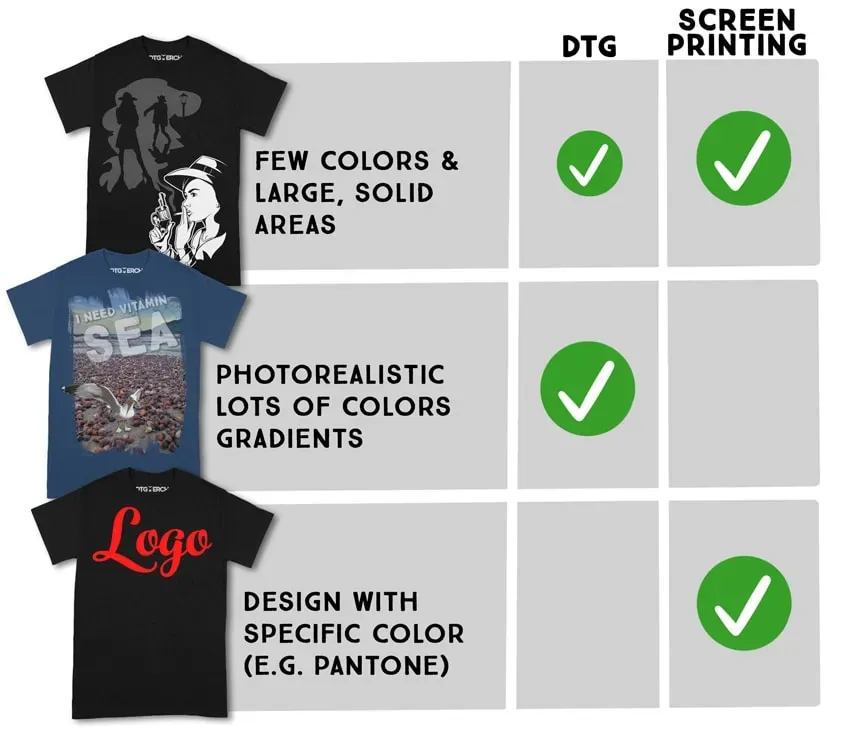
DTG vs Screen Printing is a pivotal topic for brands and designers seeking the right method for custom shirts. Direct-to-garment printing offers rich color depth and subtle gradients, making it ideal for intricate artwork on demand. Screen printing, by contrast, excels in bold color blocks and long-lasting print durability when producing large runs. Understanding when to choose DTG over screen printing depends on design complexity, order size, and fabric type for your custom shirts. This guide highlights the trade-offs, helping you optimize color vibrancy, cost, and turnaround time across your apparel line.
From a broader perspective, the debate can be framed as digital garment printing versus traditional stencil-based ink application. This reframing highlights how technology, cost efficiency, and fabric compatibility shape outcomes for your custom shirts. Other terms like inkjet-on-fabric technology, textile printing, or silk-screen methodology echo the same core choices. Considering color fidelity, durability, and lead times across these terms helps designers understand trade-offs at different production scales.
DTG vs Screen Printing: Choosing the Right Path for Custom Shirts
Choosing between direct-to-garment printing (DTG) and screen printing isn’t about finding a universal winner; it’s about matching the method to your design, order size, and fabric. DTG delivers a digital workflow that excels at complex, multi-color artwork on custom shirts, while screen printing relies on stencils and layered color passes to produce bold, vivid images. Understanding these fundamentals helps brands, designers, and hobbyists plan production that aligns with goals such as detail, hand feel, and cost.
DTG shines when color fidelity and gradients matter, especially for small runs or art-heavy designs. The ability to reproduce photo-like imagery with a soft hand on cotton and light fabrics makes it a compelling choice for limited editions and on-demand customization. However, as volumes increase, per-unit costs can rise due to ink usage and ongoing maintenance, making screen printing more cost-efficient for large batches.
How Direct-to-Garment Printing Delivers Color Vibrancy on Light Fabrics
Direct-to-garment printing delivers exceptional color vibrancy and smooth gradients on light fabrics, making it ideal for designs that require nuanced tones on custom shirts. Because the ink is sprayed digitally, DTG can reproduce subtle shifts in color and intricate details without the need for multiple screens, preserving fidelity in every layer.
On white or light-colored garments, DTG often achieves bright, saturated colors with a soft hand feel. The main caveat is that some designs on darker fabrics require a white underbase to maintain vibrancy, which adds steps and can affect brightness and cost. When used appropriately, DTG on light fabrics delivers striking visuals that align with modern art-forward or photographic artwork.
The Durability Difference: Print Longevity for Screen Printing vs DTG
Print durability is a core consideration for custom shirts intended for heavy use or repeated washing. Screen printing is widely celebrated for its longevity because inks are cured into the fabric through a heat process, creating a durable bond that maintains color through hundreds of washes. For bold logos or designs on solids, screen printing often provides the strongest long-term performance.
DTG durability depends on factors such as fabric type, ink chemistry, and curing practices. On cotton blends, DTG can be very durable when properly cured, but some blends or frequent hot-water washes may reveal wear earlier than screen-printed equivalents. With appropriate inks and process controls, DTG can offer excellent durability on many fabrics, especially for intricate, high-fidelity artwork on light garments.
Cost, Lead Time, and Break-Even: What Fits Your Custom Shirt Runs
Understanding cost dynamics helps prevent surprises in your custom shirt program. DTG generally has lower setup costs for small runs because there are no screens to create, but per-unit costs can rise with color count and fabric type during larger orders. Screen printing requires higher upfront setup (screens, emulsions, and setup time), yet benefits from dramatically reduced per-unit costs as quantity grows, often delivering the best value for large campaigns.
Lead times and production planning also differ. DTG can offer quick turnarounds for on-demand or limited-release items, while screen printing shines for bulk orders where repeatability and efficiency drive down costs per unit. A practical approach is to calculate the break-even point for a given design: if a run is small, DTG may be cheaper; for hundreds of shirts with simple artwork, screen printing often wins. Hybrid strategies—DTG for art-rich items and screen printing for base colors—can optimize both cost and speed.
Fabric and Color Considerations for Optimal DTG and Screen Printing Results
Fabric type is a major driver of which method yields the best results for custom shirts. Cotton and cotton blends generally respond well to both DTG and screen printing, with DTG delivering a rich color palette on light fabrics and screen printing delivering dense color on solid-color garments. When working with dark fabrics, an underbase may be used in DTG to brighten colors, which adds steps but can still produce excellent results.
Polyester and high-synthetic-content fabrics pose specific challenges. DTG can print on polyester with poly-friendly inks, though performance varies with garment color and fiber treatment. Screen printing is typically very durable on poly when cured correctly and is often favored for performance apparel. These fabric dynamics influence decisions about color vibrancy, print durability, and overall hand feel across different garment types.
Practical Workflow and Design Tips for Choosing Between DTG and Screen Printing
Effective workflow starts with artwork readiness. DTG benefits from high-resolution flattened files (PNG or TIFF) with defined colors and ICC profiles to ensure consistency across printers, enabling multiple SKUs in a single catalog without changing screens. Screen printing, by contrast, relies on color separations and screens, so designs should prioritize bold lines and a limited palette for efficiency and repeatability.
A pragmatic approach combines testing and preparation. Order small samples from both methods to compare color vibrancy, soft hand feel, and durability before committing to a full run. For shops with many SKUs or diverse design needs, a hybrid production plan—DTG for art-heavy pieces and screen printing for base colors or team graphics—can optimize both cost and lead times while delivering consistent, high-quality custom shirts.
Frequently Asked Questions
DTG vs Screen Printing: What is the difference for custom shirts, and when should you choose one over the other?
DTG (direct-to-garment printing) is digital and excels at many colors and photo-like artwork with a soft hand on custom shirts. Screen printing uses screens to apply layers for bold color and durability at scale. Choose DTG for small runs or designs with lots of colors; choose screen printing for large orders, solid color blocks, and long-lasting prints.
DTG vs Screen Printing: How does color vibrancy compare on custom shirts?
DTG delivers nuanced color transitions and gradients ideal for complex artwork. Screen printing provides vivid, solid color blocks with high color saturation and durable edges. On dark fabrics, screen printing often yields brighter vibrancy, while DTG may require a white underbase.
DTG vs Screen Printing: Which method offers better print durability for custom shirts?
Screen printing is widely recognized for durability because inks are cured into the fabric, producing long-lasting color. DTG can also be durable on 100% cotton with proper curing, but results vary with fabric blends and care.
DTG vs Screen Printing: What are the cost and lead-time considerations for small runs of custom shirts?
DTG has low or no setup costs and quick turnaround for small runs, making it cost-effective for limited quantities. Screen printing has higher upfront setup but lower per-unit costs at scale; for small runs, DTG is often faster and cheaper, while screen printing becomes more economical as volumes grow.
DTG vs Screen Printing: How do fabric types affect which method you should use for custom shirts?
Cotton and light blends respond well to both methods; DTG offers rich color on white or light fabrics with a soft feel, while dark fabrics may require an underbase. Polyester often performs better with screen printing, and performance finishes may favor screen printing durability.
DTG vs Screen Printing: Can you use a hybrid approach to optimize color vibrancy and durability for custom shirts?
Yes. A hybrid approach uses DTG for art-heavy designs with many colors to maximize color vibrancy and detail, while using screen printing for base colors or bulk quantities to optimize durability and cost.
| Aspect | Key Points |
|---|---|
| What DTG is | Direct-to-garment printing is a digital process that sprays ink directly onto fabric; excels at full-color, photo-like images, smooth gradients, and intricate details. No screens are required, enabling prints with many colors in a single run, ideal for high fidelity on light fabrics. |
| What Screen Printing is | A traditional method using stencils (screens) to apply ink in layers; each color needs a separate screen. Great for bold colors, durability, and low per-unit cost at scale; setup takes longer but long-run efficiency is strong. |
| When to Choose DTG | Many colors/gradients, photo-like artwork, or small runs; high fidelity and soft hand feel; underbase on dark fabrics can add steps. |
| When to Choose Screen Printing | Large quantities or simple/limited-color designs; strongest color impact, durability, and lowest per-unit cost at scale; robust on cotton and blends. |
| Fabric Considerations | DTG works well on cotton and light fabrics; dark fabrics need underbase; polyester can be printed with poly-friendly inks. Screen printing is robust on poly and blends; durable across many fabrics. |
| Durability & Washability | Screen printing is renowned for durability; DTG can be durable on high-quality cotton with proper curing, but performance varies by ink and fabric. |
| Cost & Lead Time | DTG: low setup, fast for small runs; per-unit cost can rise with volume. Screen: higher upfront setup, lower per-unit cost at scale; ideal for large campaigns. |
| Design & Workflow | DTG is digital—no screens, suitable for on-demand and many SKUs. Screen printing relies on color separations and screens; best for bold lines and consistent color blocks in bulk. |
Summary
DTG vs Screen Printing: Key points at a glance show how each method suits different production needs, from color fidelity and soft hand feel to durability and cost at scale. The choice depends on artwork complexity, order size, and fabric, with a practical path often blending both methods for diverse product lines.