
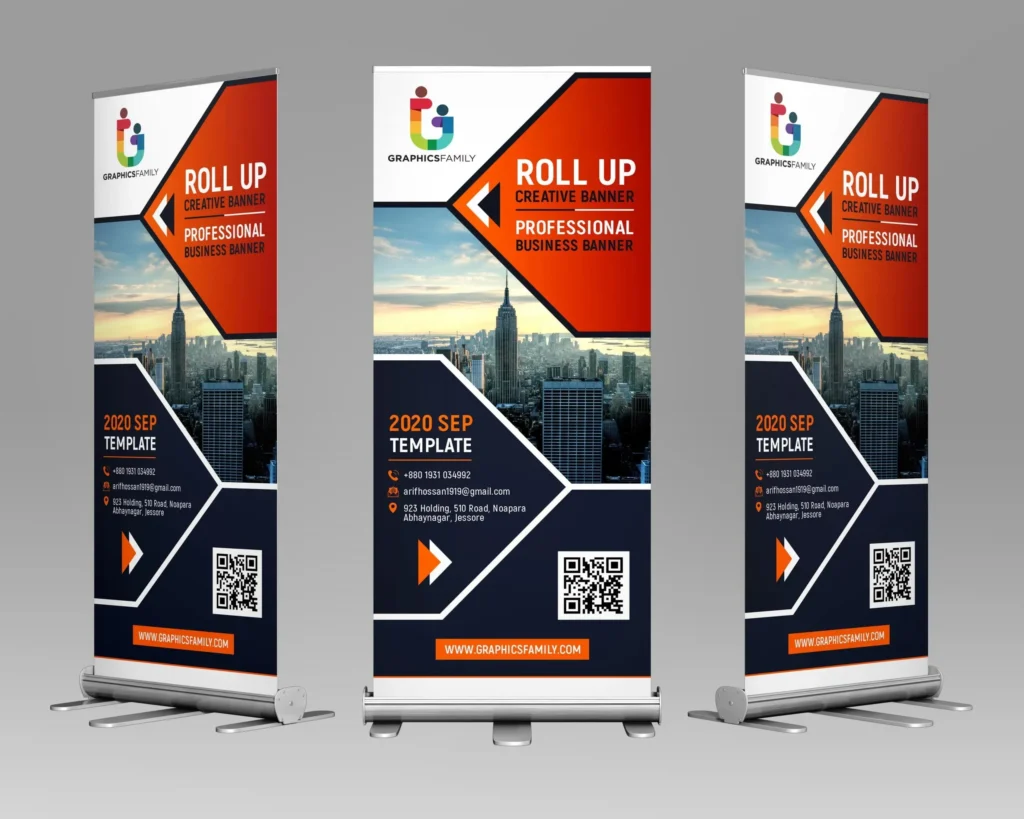
Performance of Your Custom Roll Up Banner sets the baseline for turning eye-catching visuals into measurable business results, tracked by banner metrics. By focusing on roll up banner performance, you align creative with concrete goals and the metrics that matter for visibility and engagement. When you measure custom banner ROI, you can quantify returns on investment and justify future spend across events, signages, and retail environments. This guide emphasizes how to capture tradeshow analytics and translate data into actions that improve banner effectiveness. Developing a repeatable measurement process helps optimize every deployment and demonstrates how your banner drives awareness, engagement, and conversions.
Viewed through an alternative lens, the topic becomes evaluating the impact of a visual display rather than a single sign, focusing on how a portable banner influences awareness, interest, and action. Rather than counting impressions alone, consider display asset performance using engagement signals, CTA responses, and lead generation at events. This approach aligns with a metrics-driven mindset, drawing on tradeshow analytics, audience interactions, and conversion indicators to reveal the true value of your banner.
Performance of Your Custom Roll Up Banner: Setting Clear Objectives for Success
Setting clear objectives anchors every measurement plan. Before worrying about impressions or QR scans, define what success looks like for this banner—lead generation, traffic to a landing page, or on-site promotions. When objectives are specific, the banner metrics you track become meaningful, and you can translate attention into business value. This approach also helps you address the broader concept of the Performance of Your Custom Roll Up Banner and relates directly to how tradeshow analytics translate into real outcomes. By aligning goals with measurable targets, you establish a foundation for evaluating banner effectiveness and ROI.
With clear goals, establish a measurement plan: baseline targets, trackable elements (QR codes, UTMs, show codes), and a timeline for data collection. Map each metric to an objective, so banner performance becomes a repeatable process you can optimize across events. This disciplined setup supports ongoing improvement in banner metrics and makes it easier to compare roll up banner performance across shows, ensuring you stay focused on measurable outcomes and the long-term value of your investment.
Crafting Banner Metrics That Drive Real Tradeshow Analytics
Identify core metrics: reach, impressions (offline estimates), engagement signals like QR scans, CTAs, and lead captures. Tie those metrics to business outcomes—awareness, engagement, and conversions. Use terms such as banner metrics and banner effectiveness to frame analysis. In the context of tradeshow analytics, these metrics become the foundation for ROI calculations and cost-per-outcome projections that help justify the investment in your banner.
Create a metric map: for example, match CTA response rate to form submissions, or lead quality to CRM entries. Plan to attribute visits to the banner through UTM parameters and show-specific codes, so your banner ROI isn’t guesswork. This ensures the data collected feeds cleanly into dashboards and informs creative optimization, enabling you to compare performance across venues and refine tactics for future banners.
Maximizing Custom Banner ROI: Linking Costs to Outcomes
ROI-focused thinking requires tracking costs (design, printing, logistics) against outcomes (leads, sales, qualified actions). Use cost per lead, cost per conversion, and revenue influenced by banner campaigns to gauge value. By tying the banner to CRM events and post-show sales, you can quantify the impact and compare it to other marketing investments. This aligns with the concept of custom banner ROI and helps you justify continued spending on high-performing display assets.
Develop a framework to value intangible effects too, like brand recall and sentiment. Use post-event surveys and qualitative feedback to complement quantitative banner metrics. In tradeshow analytics, ROI isn’t limited to immediate sales—it also includes longer-term pipeline contributions. Tracking both short-term conversions and ongoing engagement gives a fuller picture of value from your roll up banners.
Measuring Reach, Engagement, and CTA: From Impressions to Conversions
Start with reach and impressions to gauge top-of-funnel awareness, but balance with engagement signals and CTA responsiveness. Outline a simple equation: reach plus engagement equals potential action, with the CTA conversion as the actual outcome. Frame this through banner effectiveness to ensure you move beyond vanity metrics toward meaningful outcomes in banner metrics and ROI.
Use reliable tracking for attribution: QR codes, short URLs, and UTMs guide traffic to a dedicated landing page. Tie form submissions or downloads to the banner campaign and synchronize with your CRM. This connection helps you quantify the direct impact of the banner on conversions and build a clearer picture of performance across multiple events.
Optimizing Layout and Copy for Banner Effectiveness Across Venues
Design choices matter: readability at distance, source of contrast, and a clear single CTA drive banner effectiveness. Align the copy with the audience’s intent and the event context. Use A/B-style testing across shows to see which layout yields stronger banner metrics and better outcomes in tradeshow analytics, ensuring your creative keeps pace with changing attendee interests.
Experiment with design variations: headline size, imagery, and color palettes. Maintain consistent tracking across variants to compare ROI and banner performance. This ongoing optimization helps you refine the banner’s message and layout for higher engagement and improved banner metrics, contributing to a stronger overall banner ROI over time.
Practical Benchmarking and Continuous Improvement of Roll Up Banners
Standardize measurement with templates and a repeatable process so you can compare campaigns over time. Define baselines and target improvements for each metric, and document learnings to inform future banners. This aligns with the broader goals of banner metrics, banner effectiveness, and the ongoing demand for robust tradeshow analytics to guide decision-making.
Create a feedback loop that ties back to creative, placement, and offers. Use post-event data, CRM, and analytics dashboards to monitor performance and identify optimization opportunities. The result is a scalable approach to the performance of your roll up banners and a clearer path to higher banner metrics and ROI across events.
Frequently Asked Questions
How do banner metrics inform the Performance of Your Custom Roll Up Banner at a tradeshow?
Leverage tradeshow analytics to quantify the Performance of Your Custom Roll Up Banner through banner metrics. Track reach and impressions (offline estimates), engagement signals (QR scans, conversations near the banner), CTA response rate, lead capture, and traffic to your landing page or digital assets. Compare results against your goals to assess awareness, interest, and action, and use the findings to optimize future banner deployments for better banner metrics and higher ROI.
What are the essential tradeshow analytics to measure the Performance of Your Custom Roll Up Banner?
Essential tradeshow analytics for measuring the Performance of Your Custom Roll Up Banner include QR or code interactions, UTMs on destination links, landing page visit counts, form submissions, and post-event conversions. Tie these data points to your CRM to evaluate lead quality and overall banner ROI, then adjust offers, placement, and copy to improve banner effectiveness.
How can you calculate ROI for the Performance of Your Custom Roll Up Banner at a single event?
ROI for the Performance of Your Custom Roll Up Banner at a single event can be quantified with a simple formula: ROI equals (revenue and pipeline value from post-event actions minus total banner costs) divided by total banner costs. Monitor cost per lead and cost per acquisition to gauge efficiency and justify future investment.
Which banner metrics best indicate banner effectiveness for the Performance of Your Custom Roll Up Banner?
Key banner metrics that indicate banner effectiveness for the Performance of Your Custom Roll Up Banner include CTA response rate, lead quality and conversion rate, offer redemption, engagement signals, and brand recall. Use post-event surveys to add sentiment data and calibrate design and copy for stronger banner metrics.
How can you improve roll up banner performance through A/B testing for better banner effectiveness?
Roll up banner performance can be boosted with targeted A/B testing of design elements. Test variations in headline, CTA copy, color palette, image treatment, and layout. Measure impact on banner metrics and overall banner effectiveness, keeping tests controlled and using statistically sound sample sizes to decide on changes.
What practical steps should you take to integrate tradeshow analytics into measuring the Performance of Your Custom Roll Up Banner?
Practical steps to integrate tradeshow analytics into measuring the Performance of Your Custom Roll Up Banner: set a clear objective, attach trackable elements such as QR codes and show-specific UTMs, collect data across touchpoints (CRM, landing pages, surveys), build a reusable measurement template, and review results after the event to optimize future banners.
| Topic | Key Points |
|---|---|
| Introduction | Measuring impact is essential for any business investing in events, signage, or retail; define goals, metrics, and measurement methods to quantify awareness, engagement, and actions; implement a repeatable process to optimize ROI. |
| Why measuring performance matters | Turns attention into business outcomes by linking banner results to objectives (leads, traffic, redemptions, or brand recall); answers whether the banner attracts the right audience and prompts the desired actions; enables data‑driven cost justification and improvements. |
| Key metrics to track | Reach/impressions (offline estimates); Engagement signals (QR scans, conversations); CTA response rate; Lead capture and conversions; Traffic to digital assets; Offer redemption; Brand recall; Cost per outcome and ROI. |
| How to set up measurement | Define objective; Choose metrics; Create trackable elements (QR codes, UTMs, show codes); Establish baselines; Collect data across touchpoints; Time-bound analysis; Analyze and compare; Translate insights into optimization; Document and standardize. |
| Tools and data sources to support measurement | QR code analytics; Landing pages and form submissions; Analytics dashboards; Post-event surveys; Sales and CRM data. |
| Interpreting results and turning data into action | Did the banner meet its objective? Which metrics improved after design or placement changes? Is there a clear ROI signal? Consider external factors and use control periods to isolate effects. |
| Common pitfalls and best practices | Avoid vanity metrics; avoid clutter; consider audience context; maximize tracking opportunities; plan post-event follow-up. |
| Practical optimization ideas for future banners | Simplify the message; Elevate the CTA with contrast and white space; Use color psychology; Align placement with buyer journeys; Test design variations. |
| Real-world example and learning moments | A hypothetical conference scenario with a QR code, landing page, and show-specific promo code demonstrates how views, scans, visits, form completions, redemptions, and post-event sales translate into measurable outcomes and inform future banner decisions. |
Summary
Performance of Your Custom Roll Up Banner is not just about proving a show was successful; it’s about building a repeatable process that improves every banner you deploy. By defining clear objectives, selecting meaningful banner metrics, and implementing trackable elements, you transform a static display into a data-driven asset. The focus on banner metrics, ROI, and banner effectiveness helps you understand what works, why it works, and how to optimize for better tradeshow analytics over time. With thoughtful measurement and disciplined optimization, your next roll up banner can deliver stronger results, better engagement, and a higher return on your event investments.