
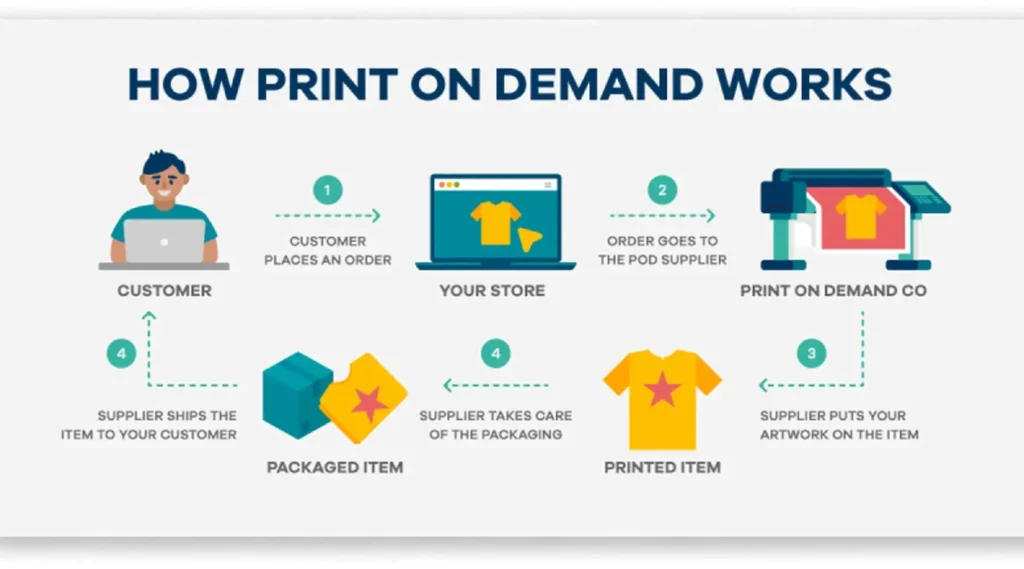
Print on Demand unlocks a scalable, inventory-light path for selling custom products, letting brands ship high-quality designs without upfront stock. The core opportunity lies in aligning design, production, and fulfillment so each order reinforces your brand rather than becoming a one-off risk. A robust start emphasizes practical guidelines that help designs translate accurately across substrates, account for color shifts, and remain legible on diverse products. Beyond aesthetics, a disciplined approach to production quality and a clear fulfillment plan protect margins and reduce returns by catching issues early. When these elements are woven together with a deliberate workflow mindset, you create a repeatable, scalable operation that delights customers and grows with demand.
From a broader perspective, the POD model is often described through terms like on-demand printing, digital print services, or flexible manufacturing for custom merchandise. This framing emphasizes how products are produced only after an order is placed, enabling rapid iteration, lower inventory risk, and closer alignment with real customer demand. Viewed this way, the focus shifts to efficient asset management, reliable suppliers, and streamlined processes that shorten lead times while preserving quality.
Print on Demand Design Excellence: From Concepts to Print-Ready Files
In the realm of Print on Demand, design is the first impression and the strongest differentiator. Following proven POD design guidelines and print on demand best practices helps ensure that your art translates reliably across substrates, colors, and finishes. By starting with the right canvas and accounting for substrate color and texture, you set a foundation where typography, imagery, and composition stay sharp from screen to print.
This phase is about translating ideas into production-ready assets. Emphasize color management, safe zones, and bleed to prevent surprises at the trimming stage. Layered files and proofing that mirror production realities reduce rework and protect your brand integrity, while product-specific testing confirms that a design performs consistently on T-shirts, mugs, posters, and more.
Print Quality Control for POD: Guarding Consistency Across All Orders
Quality control for POD is a systemic discipline, not a one-off check. Establish objective standards for color, placement, stitch quality, and material consistency, and embed them into your production briefs so every stakeholder shares the same expectations. This creates a reliable baseline that supports predictable outcomes even as you scale.
Implement pre-production proofs, monitor color management across devices, and conduct on-demand quality checks on a representative sample of orders. Document defects, track trends, and close the loop with suppliers to drive continuous improvement. A quality-first culture reduces returns and preserves brand trust, enabling you to scale with confidence.
Efficient and Transparent Order Fulfillment in Print-on-Demand
Fulfillment in POD goes beyond printing; it encompasses packaging, timelines, and last-mile delivery. Decide whether to handle fulfillment in-house, partner with a 3PL, or leverage your POD supplier’s direct-to-consumer services, weighing speed, cost, and control. Thoughtful packaging not only protects the product but also reinforces your brand narrative.
End-to-end visibility is essential. Track production lead times, transit durations, and delivery windows, and set accurate expectations with customers to minimize dissatisfaction. Align fulfillment with production calendars and design-for-fulfillment principles to avoid stockouts and ensure a smooth post-purchase experience.
POD Workflow Optimization: From File to Final Product
POD workflow optimization is about mapping a repeatable journey from file submission to customer delivery. Document each step, identify bottlenecks, and automate where possible. Standardize file preparation with templates that lock in color profiles, bleed, and safe zones to reduce rework and ensure consistency across all product categories.
Invest in automation and a diversified vendor ecosystem to reduce risk and improve speed. Route orders intelligently to the best supplier for each item, monitor production metrics, and use data to refine design guidelines and fulfillment paths. A well-tuned workflow minimizes friction and supports scalable growth.
Packaging, Branding, and the Unboxing Experience in POD
Packaging is a critical touchpoint that communicates your brand values before the product even reaches the customer. Use packaging that protects the item while reflecting your brand identity, and consider branded inserts or tissue to elevate unboxing experiences. Thoughtful packaging aligns with print on demand best practices and strengthens perceived value.
A cohesive packaging strategy also supports returns reduction and customer satisfaction. Clear labeling, easy-to-follow care instructions, and consistent presentation help customers feel confident in their purchase. When packaging and branding are integrated with design and fulfillment, they reinforce a reliable, premium customer experience.
Building a Resilient POD Ecosystem: Suppliers, SLAs, and Performance Metrics
A resilient POD operation relies on strong supplier relationships and a diversified vendor mix. Establish service-level agreements (SLAs) that reflect your quality standards and delivery expectations, and maintain backup suppliers to mitigate capacity risks. This vendor ecosystem is a foundation for reliable order fulfillment and consistent print outcomes.
Measure performance with concrete metrics such as order cycle time, pick-and-pack accuracy, and on-time delivery rate. Use these insights to optimize the supplier mix, fine-tune production settings, and drive continuous improvement. A data-driven approach to partnerships and processes embodies POD workflow optimization and helps sustain growth over time.
Frequently Asked Questions
What are print on demand best practices to ensure high-quality products and satisfied customers?
Adopt print on demand best practices by grounding your process in strong design, reliable quality control, and consistent fulfillment. Start with clear POD design guidelines and color management to translate artwork accurately. Implement pre production proofs and on demand quality checks to catch issues before customers see them. Choose production partners with service level agreements that match your promised lead times and provide transparent tracking. Regularly review performance metrics to refine your workflow and reduce returns.
How do POD design guidelines help ensure art translates correctly across products?
POD design guidelines help ensure art translates correctly by standardizing safe zones, color profiles, typography, and file formats. Test designs across product templates to verify scale and placement before production. Deliver print ready files with clear instructions to reduce misinterpretation and rework. This approach preserves brand consistency across apparel, mugs, posters and more.
How can I enforce print quality control for POD to minimize defects and returns?
To enforce print quality control for POD, set objective standards for color, placement and fabric or material consistency. Calibrate monitors and printers for color accuracy. Use pre production proofs to verify results before full runs. Perform on demand quality checks by sampling a percentage of orders for final inspection. Track defects and establish a feedback loop with suppliers to reduce issues over time.
What should I consider for order fulfillment in print on demand to meet delivery promises?
For order fulfillment in print on demand consider your fulfillment model options, such as in house, third party logistics or the supplier direct to consumer service. Optimize packaging to protect the product and reflect your branding. Track end to end timelines and align with the production calendar. Streamline returns with a simple process and measure on time delivery and order accuracy to drive improvements.
How does POD workflow optimization reduce errors and speed up production?
POD workflow optimization means mapping the end to end process, standardizing file preparation with templates, and automating checks. Build a vendor ecosystem with multiple suppliers to reduce risk and increase speed. Optimize how orders route to the best supplier for each item based on speed and quality. Use data driven insights to improve design guidelines and fulfillment paths and communicate timelines clearly to customers.
What is a practical playbook to align design, quality, and fulfillment in a POD catalog?
A practical playbook to align design, quality, and fulfillment in a POD catalog is to create a living document. Publish design guidelines for each product category, including color, typography, safe zones, and file formats. Establish objective quality standards and verify with pre production proofs. Choose fulfillment partners that meet your service levels and branding goals. Build a POD workflow with templates, routings and dashboards to track progress. Regularly review performance metrics and iterate.
| Topic | Core Idea | Why It Matters | Practical Tips |
|---|---|---|---|
| Design Guidelines for POD | Translate ideas into print-ready files that reproduce accurately; design within safe and trimmed areas; account for the final substrate color and texture; ensure high-resolution sources; use appropriate color profiles; ensure typography is legible; include safe margins and bleed; build layered files and proofs; test designs across products; deliver print-ready formats (PDF, PNG with transparent background, or vector formats). | A strong, production-ready design reduces misprints, returns, and misalignment; enhances brand impact and buyer confidence. | Use product templates; convert colors to production-ready color space; verify color fastness; ensure typography scales; maintain safe margins and bleed; produce proofs; test on multiple products; deliver correct file formats. |
| Quality Control for POD | Quality control must be systematic, repeatable, and scalable; define exact tolerances for color, placement, stitching, and material consistency; calibrate monitors and printers; use pre-production proofs; perform on-demand quality checks; document defects and track trends; create feedback loops with suppliers; cultivate a quality-first culture. | Prevents defects, protects your brand reputation, reduces returns, and ensures a consistent customer experience. | Calibrate monitors and printers; define exact tolerances; request soft proofs; perform random sampling; document defects and trends; establish supplier SLAs; educate the team on quality importance. |
| Fulfillment and Logistics | Fulfillment involves selecting the right model (in-house, 3PL, or supplier direct-to-consumer), optimizing packaging, tracking end-to-end timelines, aligning with the production calendar, streamlining returns, and measuring performance. | Delivery speed and product condition build customer trust and drive repeat purchases. | Choose fulfillment model; invest in branded packaging; track production and transit timelines; align launches with supplier capacity; implement simple returns; monitor KPIs such as order cycle time and on-time delivery. |
| POD Workflow Optimization | Build a repeatable POD workflow: map end-to-end process; standardize file preparation; automate routine checks; invest in templates and automation; develop a vendor ecosystem; optimize order routing; and communicate with customers. | Minimizes friction and errors, reduces costs, scales with demand, and improves customer satisfaction. | Document the process; create product-category templates; implement automated file-spec checks; diversify suppliers; route orders to best supplier; monitor dashboards and metrics; set clear customer expectations. |
| Putting It All Together / Playbook | Integrate design guidelines, a quality-control program, and fulfillment capabilities; start with design guideline documents; implement objective QC standards; select partners; build an end-to-end POD workflow; review performance regularly. | Creates a virtuous cycle of better customer experience and business growth. | Publish design guidelines per category; set service levels; monitor performance; hold quarterly reviews; iterate improvements. |
| Conclusion / POD Mastery | Master Print on Demand by orchestrating design, quality, and fulfillment into a continuous cycle. | Sustainable growth, higher margins, and a loyal customer base. | Apply the principles, run experiments, and continuously refine your POD strategy. |
Summary
Print on Demand is a dynamic system where design, quality, and fulfillment are orchestrated into a reliable customer experience. By aligning strong, print-ready design with rigorous quality control and efficient, transparent fulfillment, brands can reduce errors, accelerate delivery, and build lasting trust with customers. This integrated approach creates a repeatable, scalable POD workflow that supports consistent product quality across categories and seasons. Invest in clear design guidelines, establish objective QC standards, and build fulfillment capabilities that reflect your branding — and you’ll unlock sustainable growth, healthier margins, and a loyal customer base that returns to your Print on Demand offerings.